

Because long before the skyline changes… the real work has already begun.
By Carmin Tillit
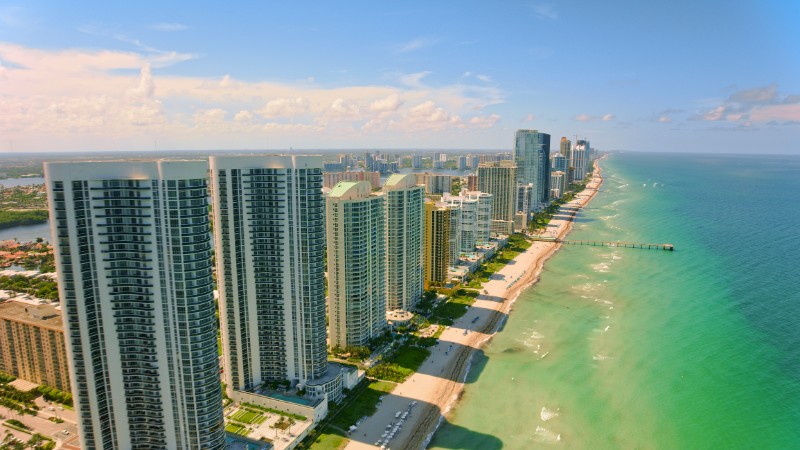
If you look at Sunny Isles Beach today, it’s easy to assume it was always this way.
Glass towers.
Luxury developments.
A continuous wall of high-rise construction along the coastline.
But that version of Sunny Isles is relatively new.
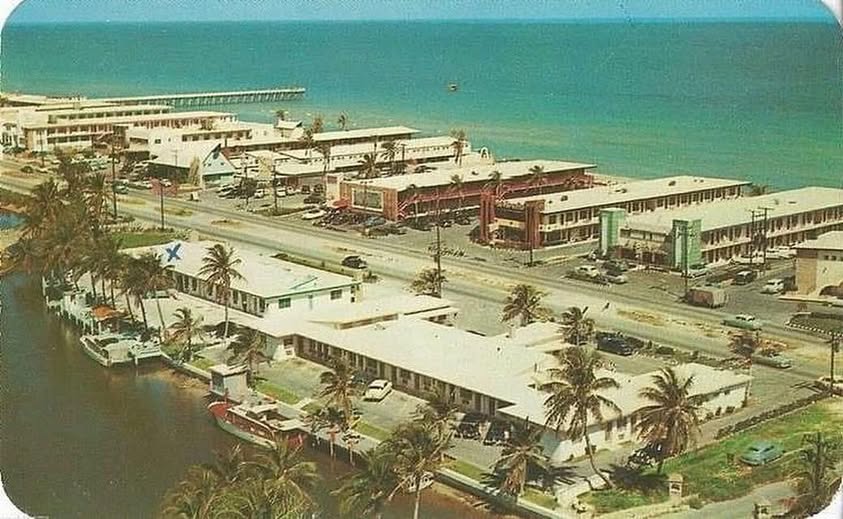
Because not long ago, the same stretch of land looked completely different.
What Was There Before
In the early 2000s, much of Sunny Isles wasn’t defined by towers.
It was defined by:
- Low-rise motels
- Timeshare properties
- Small-scale beachfront buildings
- Large parcels with relatively low density
In many cases, these were aging properties—functional, but no longer aligned with the direction the market was heading.
What’s important to understand is:
The transformation didn’t start with construction.
It started with control.
The Complexity of Ownership
One of the most overlooked challenges in redevelopment—especially in legacy coastal properties—is ownership structure.
In several cases across Sunny Isles, properties weren’t owned by a single entity.
They were timeshares.
Which means:
- Individual units
- Owned by dozens of different people
- Across fixed time allocations
In practical terms, a single building could represent:
- Hundreds of units
- Thousands of individual ownership interests
Before anything could be designed, permitted, or built…
Those interests had to be consolidated.
Why Buyouts Take Years—Not Months
From the outside, redevelopment can look like a straightforward transaction:
A developer acquires a property.
Plans are created.
Construction begins.
But with timeshare properties, acquisition is not a single deal.
It’s a process.
Each ownership interest must be:
- Identified
- Contacted
- Negotiated
- Purchased
- Legally recorded
And because ownership is fragmented, timelines extend.
Some owners are ready to sell immediately.
Others are not.
Some require negotiation.
Others resist entirely.
What Happens When Not Everyone Agrees
This is where the process becomes strategic.
In large-scale buyouts, there is often a threshold:
Once a certain percentage of ownership is acquired, remaining interests can be addressed through structured legal mechanisms.
But reaching that threshold takes time, coordination, and persistence.
It’s not just about capital.
It’s about execution.
Where East of Collins Was Involved
During one of these major redevelopment efforts in Sunny Isles, we were engaged to support the recording process tied to these acquisitions.
This wasn’t traditional permitting.
But it was a critical part of the pre-development phase.
Over an extended period, our role included:
-
Recording new deeds as ownership interests were acquired
-
Ensuring documentation aligned with Clerk of Courts guidelines
-
Supporting the flow of recordings across a high-volume, multi-party process
-
Helping move a fragmented ownership structure toward consolidation
This phase lasted not weeks—but years.
Because that’s what it takes to transition a property from legacy use to redevelopment-ready.
Why This Phase Matters More Than People Think
Most people associate development with what they can see:
Cranes.
Construction.
Finished towers.
But by the time those elements appear, the most complex part of the project is often already complete.
Because without:
- Clear ownership
- Properly recorded transactions
- Legal alignment across stakeholders
Nothing else moves forward.
The Transformation That Followed
Once properties like these were consolidated, the next phase could begin:
- Demolition
- Re-entitlement
- New development
And over time, that process repeated across multiple sites.
What was once a stretch of low-rise, fragmented properties became:
A highly concentrated, high-value corridor of luxury development.
How Fast a Market Can Change
One of the most striking aspects of Sunny Isles is not just what it became—but how quickly it changed.
In less than two decades:
- Entire blocks were reimagined
- Density increased dramatically
- Land values shifted significantly
- The skyline was completely redefined
From a planning perspective, that level of transformation is rare.
From a permitting and development perspective, it requires:
- Long-term coordination
- Deep understanding of jurisdictional processes
- The ability to operate across multiple phases of a project lifecycle
What Most People Never See
When people look at a finished tower, they see the result.
They don’t see:
- The years spent assembling ownership
- The legal structuring behind buyouts
- The coordination required before a permit is ever submitted
- The early-stage work that makes development possible
Because that part of the process is quiet.
But it’s foundational.
How EOC Thinks About Development
We don’t just engage at the point of permitting.
We understand that projects evolve in phases:
- Acquisition
- Consolidation
- Entitlement
- Permitting
- Execution
And each phase carries its own complexity.
Our role is to bring structure and clarity—whether that’s:
- Supporting documentation and recordings
- Navigating permitting pathways
- Or aligning processes so that projects can move from concept to execution
Because development doesn’t begin when construction starts.
It begins when the groundwork is laid.
Final Thought
Cities don’t transform overnight.
Even when it looks that way.
What appears to be rapid change is usually the result of years of unseen work—coordination, negotiation, and alignment happening behind the scenes.
Sunny Isles is one of the clearest examples of that.
A city that didn’t just grow—It was reassembled.
Work With East of Collins
We work with developers and project teams across South Florida at every stage of the development lifecycle—from early coordination and documentation through full permitting strategy.
If your project involves complex ownership structures, redevelopment, or multi-phase execution, we can help bring clarity to the process and keep it moving forward.
East of Collins Expediting
Permitting with Precision. Partnership with Purpose.
754.423.6283